
The safest way to complete an affiliate program migration is a staged cutover that runs the old and new platforms in parallel long enough to reconcile conversions, not just clicks, before fully switching off the original tracking. This approach limits the three primary risks: lost attribution, broken links, and partner churn. For programs with meaningful affiliate counts, a parallel run extending over multiple weeks, or longer for larger rosters, gives data a chance to stabilize before anyone acts on it.
TL;DR:
- Run both platforms through at least one full billing cycle, comparing conversions and payouts by affiliate before click counts because attribution windows may differ.
- Export affiliate IDs, subIDs, conversion history, commission rates, and creative mappings, but rebuild custom commission rules, promotion expiry logic, and network settings manually.
- Pilot with willing high volume partners, then move affiliates in phases; personally contact top earners and give partners deadlines, setup help, and a named contact.
- Test top products, promotion codes, and conversions across devices; monitor link health before and after cutover, and define rollback triggers for unexplained conversion drops.
Table of Contents
- Migration Checklist for Before, During, and After Cutover
- How to Communicate the Migration to Affiliate Partners
- What Data Transfers, What Doesn't, and How to Confirm Tracking Continuity
- Clean Up Program Terms and Confirm Compliant Disclosures
- Staging, Safe Windows, and Rollback Triggers
- Testing and Reconciliation Steps That Confirm Parity
- Common Migration Mistakes and the Fastest Wins
- Affiliate Link Audit: Catching Broken Links Before and After Cutover
- FAQ
- Sources
Migration Checklist for Before, During, and After Cutover
A structured sequence reduces the guesswork that causes most migration failures. We organize the process into five phases, each with a distinct objective.
- Pre-migration: Inventory active affiliates, align internal stakeholders on timeline and success metrics, and export affiliate IDs alongside historic conversion records.
- Setup: Build sandbox or pilot accounts on the destination platform, then map tracking parameters, commission rules, and creative inventory against the source system.
- Parallel run: Operate both platforms simultaneously, logging discrepancies in click and conversion counts, and reconcile payout data affiliate by affiliate.
- Cutover: Move affiliates in phases rather than all at once, with firm deadlines for link swaps and a short grace period for stragglers.
- Post-cutover: Track core KPIs daily for the first weeks, reconcile final payouts against the legacy platform, and collect partner feedback on the new experience.
Treat the pilot phase as a genuine test rather than a formality. A small group of cooperative, high-volume affiliates will surface platform quirks, such as cookie behavior or subID handling, that a sandbox account alone will not reveal. Before announcing a firm cutover date, confirm that link health is being monitored on both platforms so broken paths do not go unnoticed during the busiest part of the transition.
Pro Tip: Run the parallel phase through at least one full billing cycle so payout reconciliation reflects a complete, comparable data set.

How to Communicate the Migration to Affiliate Partners
Partner churn during a migration is rarely about the new platform itself. It is almost always about affiliates feeling uninformed or unsupported during the switch. Segmenting outreach by affiliate value lets a program manager focus effort where it matters most.
- Rank affiliates by revenue contribution, activity level, and strategic importance before drafting any outreach.
- Reach top partners personally, by phone or a dedicated email, while using templated emails and portal notices for the long tail.
- Give every affiliate clear action items, a realistic timeline, a link to setup help, and one named contact for questions.
- Consider a short grace period or a transitional incentive for partners who need extra time, and log every response for follow-up.
Documenting who was contacted, when, and how they responded creates a record that proves useful if a partner later disputes missed commissions during the transition window. It also helps identify which affiliates need a second touchpoint before the cutover deadline arrives.
What Data Transfers, What Doesn't, and How to Confirm Tracking Continuity
Most platforms will export the basics: affiliate IDs, subIDs, historical conversion records, commission rates, and creative mappings, typically as CSV files. What rarely transfers cleanly are custom commission rules, promo expiry logic, and some network-specific attribution settings, which usually need to be rebuilt by hand on the new system.
- Request CSV exports covering affiliate IDs, subIDs, historical conversions, commission rates, and creative asset mappings.
- Confirm which custom rules and promotional logic must be manually recreated rather than imported.
- During the parallel run, compare conversions and revenue by affiliate, SKU, and channel, prioritizing conversion reconciliation over simple click parity.
- Flag and annotate any gaps traceable to differing attribution windows or cookie lifetimes between the two platforms.
Programs with a large number of active affiliates commonly need an extended period of parallel tracking to validate attribution under real traffic conditions, since buying cycles and promotional schedules vary across a large publisher base according to FTC guidance on endorsement practices. Platform-specific documentation, such as Shopify's affiliate app notes, also warns that CSV import eligibility and account behaviors differ by platform, which makes testing sign-in and link function before announcing a cutover date a necessary step rather than an optional one.
Clean Up Program Terms and Confirm Compliant Disclosures
A migration is a natural checkpoint for program hygiene that often gets deferred during normal operations. Before or during the parallel run, use the opportunity to tighten what the program allows and remove what no longer earns.
- Review inactive publishers and either re-engage them with fresh creative or remove them from the active roster.
- Prune stale creatives and expired offers that no longer reflect current promotions or pricing.
- Standardize link formats across the program to avoid cloaked or redirected URLs that interfere with tracking on the new platform.
- Confirm disclosure language and placement remain clear and conspicuous, consistent with FTC endorsement guidance, and record any policy updates for partner onboarding materials.
Publishers often appreciate a structured disclosure audit during this phase, since it gives them a checklist to confirm their own placement and wording meet the same standard the program is now enforcing platform-wide.
Staging, Safe Windows, and Rollback Triggers
A deliberate staging sequence protects against the two most expensive outcomes: a rushed cutover that loses data, and a stalled one that frustrates partners indefinitely.
- Build and test in a development environment before inviting any affiliates.
- Run a pilot with a small group of cooperative partners to surface platform-specific issues early.
- Extend into a parallel run lasting multiple weeks, or longer for programs with many active affiliates.
- Execute a phased cutover with clear deadlines rather than a single hard switch for the entire roster.
- Define rollback triggers in advance, such as a significant unexplained conversion loss for top affiliates, paired with a communication plan for that scenario.
Recording key decisions and dates throughout this sequence makes a post-migration review far easier to conduct, since the team can trace exactly when a discrepancy first appeared rather than reconstructing the timeline from memory.
Testing and Reconciliation Steps That Confirm Parity
Testing during a migration works best when it mirrors real affiliate behavior rather than relying on synthetic clicks alone. Prioritize the scenarios that carry the most revenue risk.
- Run end-to-end tests on top SKUs and top affiliates, including promo-code flows and cross-device conversion paths.
- Reconcile conversions and payouts daily for top partners throughout the parallel run, since commission logic tied to attribution windows and cookie lifetimes often differs between platforms and drives publisher complaints when ignored.
- Document expected variance ranges and investigate any gap that persists beyond a few days, escalating publisher-facing issues quickly.
- Establish a 30, 60, and 90 day reporting cadence to confirm the new platform holds parity over time rather than just at launch.
Pro Tip: Reconcile conversions and payouts before comparing click counts. Parallel runs reveal attribution gaps that click metrics alone tend to miss.
Common Migration Mistakes and the Fastest Wins
The recurring failure pattern is speed over sequence: teams compress the parallel run to hit an arbitrary launch date, then spend months untangling disputed commissions. Personal outreach to key publishers prevents more churn than any transitional incentive offered on its own. A focused link audit completed before cutover, rather than after, consistently reduces the volume of post-migration support tickets from confused or frustrated partners.
— Michael N.
Affiliate Link Audit: Catching Broken Links Before and After Cutover
A migration multiplies the number of links that change hands, which is exactly when commercially broken ones slip through unnoticed. Audits often classify links as Broken, Needs Attention, or Healthy, so a program manager can see at a glance which issues demand immediate fixes and which need manual review before acting.
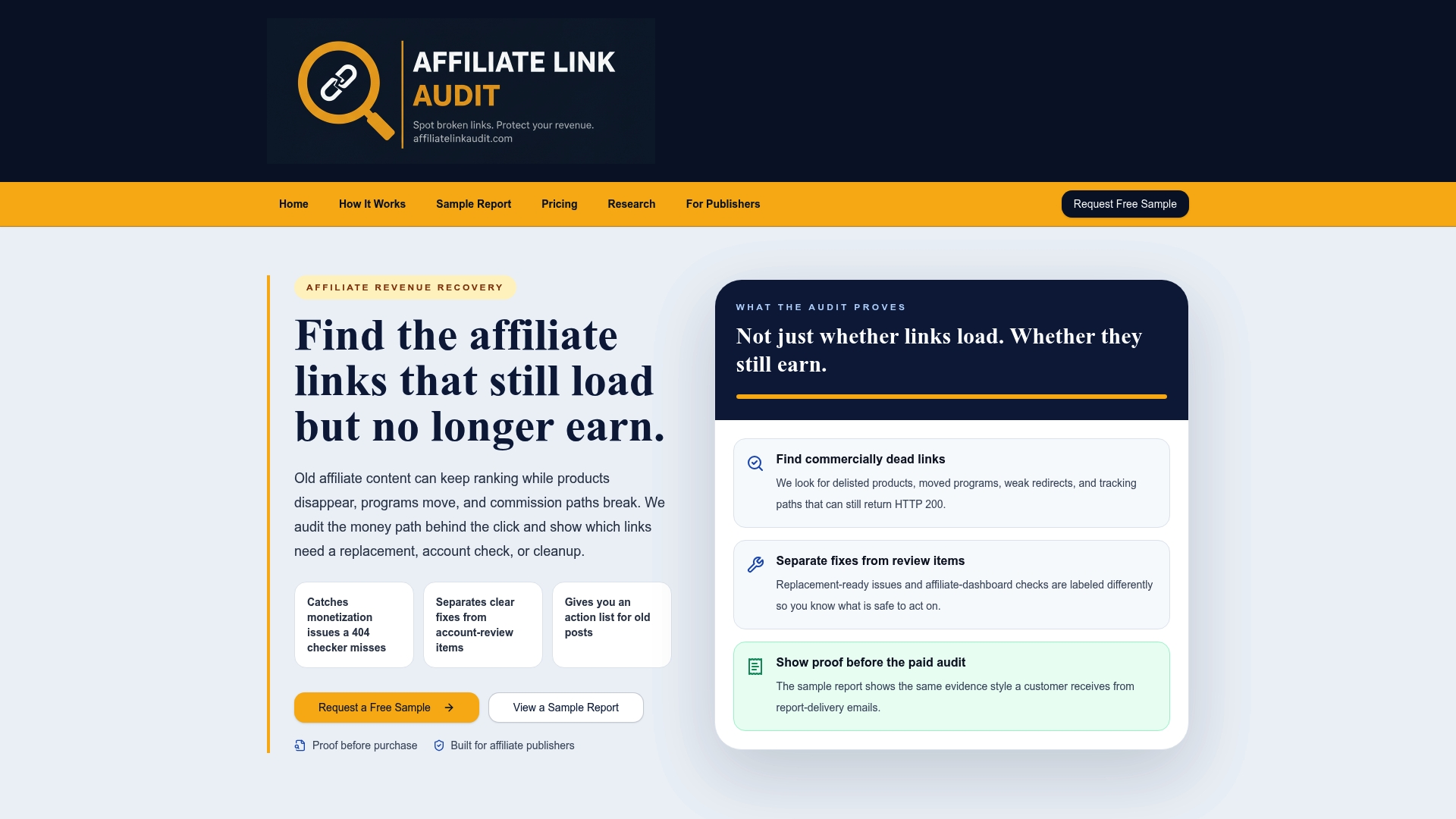
- Broken links return errors or dead ends that stop a conversion before it starts.
- Needs Attention links load normally but show signs of commercial risk, such as a discontinued product or a redirect to a generic homepage.
- Healthy links are confirmed functioning as intended for tracking and conversion.
Running an audit before cutover gives a clear baseline to measure against during the parallel run, and a second audit after cutover confirms the new platform's links are performing as expected. Start with our free sample report to see the evidence format, then request a Full Audit for complete coverage across your program.
FAQ
What is an affiliate program?
An affiliate program is a marketing arrangement where a brand pays publishers, bloggers, or content creators a commission for traffic or sales they generate through tracked links. Commission structures and tracking methods vary by platform and network, which is why continuity matters so much during a migration.
Can I use ChatGPT for affiliate marketing?
Many affiliate marketers use AI writing tools to draft content, outline comparisons, or brainstorm promotional angles, though the resulting content still needs human review for accuracy and compliance. Disclosure obligations under FTC endorsement guidance apply regardless of how the content was produced.
What does "affiliate" mean legally?
Legally, an affiliate is a party with a material financial connection to the brand it promotes, which triggers disclosure requirements under FTC guidance so readers understand the relationship behind a recommendation. The specific disclosure wording and placement are addressed in the FTC's endorsement guide Q&A.
Does an affiliate get paid?
Affiliates are paid a commission when a tracked action, typically a sale or lead, is attributed to their referral link under the program's commission terms. Payment timing and rates vary by program, and during a migration, reconciling these payouts between old and new platforms is a priority step before fully retiring the legacy system.
Sources
Recommended
- GA4 Affiliate Tracking for Marketers: partner_click Rules + $97 Audit
- Publishers: $97 Affiliate Monetization Audit Prioritizes Revenue Fixes
- Stop Revenue Leaks for Publishers: Prioritize Broken Affiliate Links
- Stop Losing Commissions: Audit Cloaked Affiliate Links for Publishers
This article was produced with AI assistance and reviewed for accuracy. Findings language ("Broken," "Needs Attention," "Healthy") reflects Affiliate Link Audit's evidence-based classification system.