
Replacing a discontinued product in an affiliate post is a five-part job: confirm the product is actually gone, rank the affected pages by revenue at risk, choose a replacement with the same intent, update the page in place, and measure the result. The hard part is the first step. A dead product often sits behind a link that still loads normally, so status-code checks report nothing wrong while qualified clicks reach a dead end. Affiliate Link Audit classifies each link as Broken, Needs Attention or Healthy, so the publisher begins the replacement work from evidence instead of a guess.
TL;DR
- A temporary stock-out and a permanent discontinuation call for different edits. Confirm which one applies before touching the page.
- A 200 OK response does not show that a product is still sold. Unavailable listings and homepage redirects frequently return one.
- Rank pages by money at risk (earnings multiplied by the share of clicks lost), not by the number of dead links.
- Replace with the same intent, category and price band, then edit the page in place and keep its URL.
- Compare 28 days before and after the change, one page at a time, and keep a change log.
Table of Contents
- Step 1: Confirm whether the product is discontinued or temporarily unavailable
- Why a status-code check misses most discontinued products
- Step 2: Rank affected pages by revenue at risk
- Step 3: Choose a replacement that fits the original purpose
- Step 4: Verify terms and tracking before the page goes live
- Step 5: Update the page in place
- Step 6: Measure whether the replacement worked
- Where an audit fits
- Perspective
- FAQ
- Sources
Step 1: Confirm whether the product is discontinued or temporarily unavailable
The first error in replacement work is treating every empty product page as a discontinuation. One out-of-stock decision table treats a product as temporarily out of stock when the seller indicates a restock or other retailers still carry it. In that case the product stays, with a notice and one or two alternatives. The same table treats it as permanently discontinued when the listing is removed, states that the item is no longer available, or 60 or more days pass without a restock. Only in that case is the product replaced and its affiliate link swapped.
Amazon listings need extra care. According to Amazon Affiliate Links to Unavailable Products: Find and Fix, an OUT_OF_STOCK value in the Creators API's OffersV2 data can appear whenever there is no featured offer. That does not necessarily mean the item is gone. The same page describes a popular item flipping to OUT_OF_STOCK or LEADTIME for a few days, or a seasonal product going UNAVAILABLE off-season, as normal temporary states. It also reports that the older PA-API 5 now returns HTTP 403 and that Creators API access requires at least 10 qualifying sales in the past 30 days. Publishers below that threshold have to verify availability another way.
A practical evidence log per product holds four fields:
- The date of the check.
- What the listing says (removed, "currently unavailable," restock date, or normal).
- Whether other retailers still stock the item.
- The classification: Broken, Needs Attention or Healthy.
The log matters because a 60-day rule cannot be applied without a first-observed date.
Why a status-code check misses most discontinued products
Most link checkers flag 404 and 5xx responses. Discontinued products rarely behave that way. AffSERP states that Amazon returns HTTP 200 for unavailable products, so a plain status check misses most dead listings. A checker has to read the page for messages such as "currently unavailable" and recommend rechecking every post's products at least twice a year.
The problem extends beyond Amazon. A link can return 200 OK while still being commercially unhealthy in one of three ways:
- Unavailable product: the page loads but the item cannot be bought.
- Generic redirect: the product URL forwards to a homepage, a search page or a different product.
- Unverifiable tracking path: the reader reaches the merchant, but the affiliate path may no longer be intact.
These are the cases that Affiliate Link Audit's method targets. More detail on why a loading page can still hide revenue risk is in the guide to affiliate link rot and 200 OK pages, and on how to separate confirmed failures from uncertain ones in out-of-stock affiliate links.
There is one limit on what any page-level check proves. Whether an order is credited remains the merchant's and network's decision. A link review identifies commercially unhealthy links and supplies evidence. It does not confirm commission crediting or measure lost income, and the publisher decides what to change.
Step 2: Rank affected pages by revenue at risk
A site with 300 posts and 80 affected links cannot be fixed in one pass, and it should not be. RevWarn's prioritization method sorts Search Console pages by click change over the last 28 days, takes each page's last-30-day earnings from network reports split by sub-ID, and applies the share of clicks lost to those earnings. A page earning $600 a month that lost 30% of its clicks has roughly $180 a month at risk. Sorting by that figure puts the pages that matter at the top.
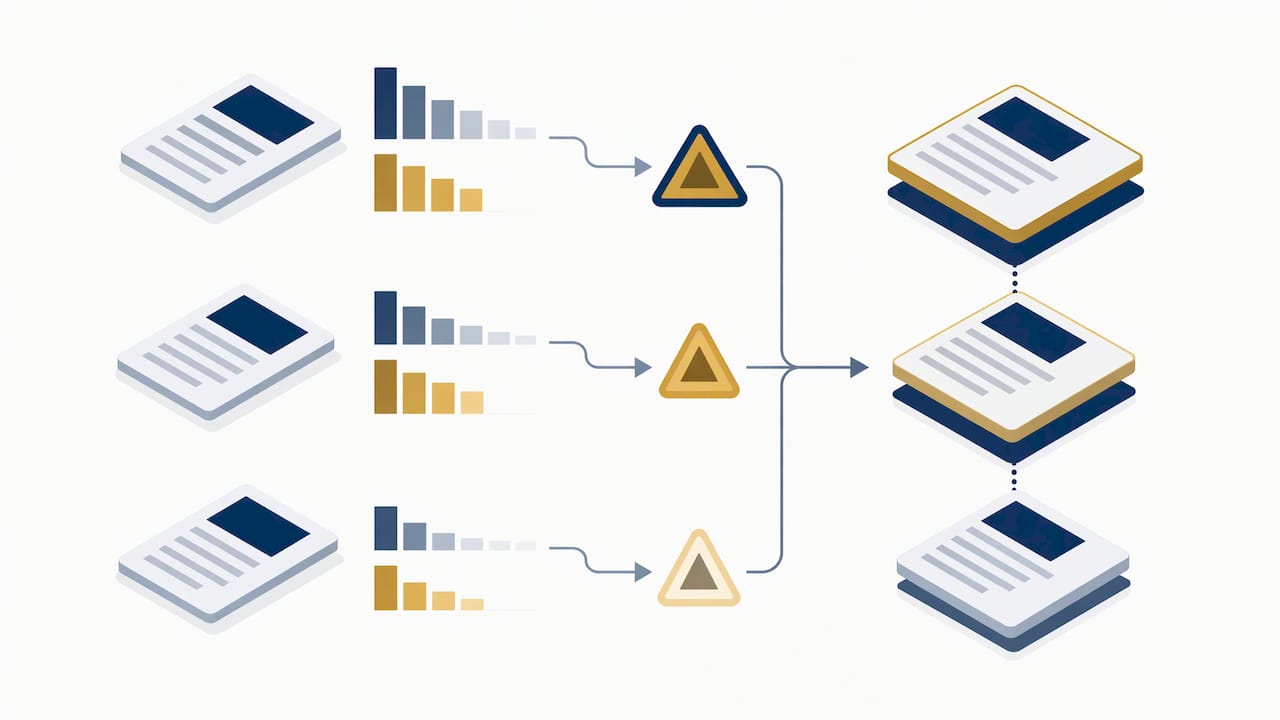
The same logic appears in Goho Money's shutdown checklist: pull clicks, revenue, conversion rate and traffic source for the last 30 to 90 days, then sort by money at risk rather than page count. One comparison page can outweigh 50 low-traffic posts.
A workable triage looks like this:
| Tier | Typical page | Action |
|---|---|---|
| 1 | High clicks, meaningful earnings, product confirmed discontinued | Replace this week |
| 2 | Moderate clicks, product status unclear (Needs Attention) | Review manually, then decide |
| 3 | Low clicks, no conversions in a year | Decide whether to update or retire the page |
| 4 | Healthy links | Recheck on the twice-yearly cycle |
For a deeper treatment of ranking by exposure instead of error count, see why publishers should rank revenue risk.
Step 3: Choose a replacement that fits the original purpose
A replacement should serve the reader who landed on the page, not simply the offer that pays best. The swap rules in Goho Money's guide ask for the same intent: same category, similar use case, similar price band and a stable merchant. A "best budget espresso grinders" post should receive budget grinders, not espresso machines. Repeated swaps without a plan can leave the page as a patchwork of unrelated picks.
Before committing, run each candidate through five checks:
- Purpose: does it do the job the discontinued product did?
- Audience: does it suit the reader the page was written for?
- Features: do the specifications the page highlights still hold?
- Price band: is it close enough that the page's "budget" or "premium" framing remains true?
- Merchant stability: does the listing look settled, with a program that has clear terms?
The same checklist advises vetting the replacement program's tracking, commission rules, cookie window and payout terms, and comparing economics beyond the commission rate, including average order value, EPC (earnings per click), refund risk and brand trust. It also warns that a fast swap to a weak offer because it pays well can tank a page over time. For dead programs specifically, the three-label approach is covered in replacing dead affiliate programs.
When no close substitute exists, the honest edit is to remove the product and say so in the comparison, not to stretch a weaker product into the slot. A page that states what changed reads as more trustworthy than one that silently repoints an old anchor.
Step 4: Verify terms and tracking before the page goes live
The replacement must be checked at the source, in two places.
The program agreement. FindAffiliates' publisher checklist says to open the affiliate account or program agreement for each recommendation and confirm eligible products, approved traffic sources, coupon rules, attribution window, payout basis and restrictions, and to confirm that the account and links are active for the country where readers shop.
The merchant's current page. Check model names, availability and price conditions there, then click every affiliate link on desktop and mobile to confirm it reaches the intended product and keeps the approved referral identifier.
For Amazon, the rules are specific. The Associates Program policies allow prices and availability only in Amazon-served links or when obtained through the Creators API or PA API under the license. They also state that purchases not correctly tracked because links are improperly formatted are disqualified. A hand-typed price beside a freshly pasted link is exactly the kind of edit that causes trouble.
Step 5: Update the page in place
The edit sequence matters as much as the replacement. Both AffSERP and Goho Money give the same top rule: keep the URL, because it holds ranking history, backlinks and internal links. Replace products in place.
A consolidated sequence, based on both guides:
- Note the confirmed status, date and source in the log.
- Update the comparison table first, keeping column order.
- Swap the affiliate links and record each placement.
- Refresh product names, images, and pros and cons.
- Search the post for every removed product name and fix the intro, the "which one should you buy" section and the FAQ.
- Remove stale schema markup for removed products.
- Update internal links that pointed to the old pick.
- Publish, then monitor rankings, clicks and conversions for 7 to 14 days, watching for soft 404s.
Re-rank from current listings instead of dropping the new product into the old top-pick slot. The old order was built on a product that no longer competes.
One caution applies to redirects. Goho Money's guardrail is to keep category-page URLs and update picks in place, using a 301 redirect only for a product-specific review that has a clear, intent-matching successor. Mass URL changes can turn useful pages into 404s or soft 404s. When many pages need the same swap, a safe site-wide update method keeps the changes controlled.
Step 6: Measure whether the replacement worked
Record the baseline before editing. SearchConsole.ai's measurement guide recommends noting the baseline, hypothesis and changed elements first, then comparing 28 complete days before and after (eight weeks for low-volume pages), and waiting for Google to recrawl before judging. It adds that control pages with difference-in-differences give a directional estimate, and that a before-and-after chart shows association, not causation.
For affiliate pages the useful metrics are:
- Search impressions, average position and CTR (Search Console).
- Outbound affiliate clicks per session.
- Network-reported orders and approved commissions, tracked separately from clicks.
Separating clicks from approved orders is deliberate. If Search Console clicks hold steady while affiliate revenue falls, Goho Money's Search Console routine points to an attribution problem rather than an SEO one. Change one page at a time, and keep the log of dates and edits.
Where an audit fits
Steps 2 through 6 are a well-defined routine. Step 1 is the bottleneck: on a large archive, reading every destination to separate Broken links from Needs Attention items consumes the time the replacement work needs. The Full Audit costs $97 as a one-off. It covers manual and semi-automated checks of whether links that still load are commercially viable, a classification of each finding as Broken, Needs Attention or Healthy, and a prioritized action plan with suggested replacements, with clear fixes separated from items that need manual review. The audit identifies the issues. The publisher makes and applies the changes.
Every audit starts with a free sample, and the sample report shows the evidence format before any purchase.
Perspective
Most guidance on discontinued products starts at the replacement: which product, which program, which commission rate. In our view the decision that determines the outcome comes earlier, at classification. A link that returns 200 OK and lands on a generic homepage looks identical to a healthy link in a status-code report, yet the reader reaches a dead end.
That is why we separate findings into Broken, Needs Attention and Healthy. A Broken link has confirmed evidence, such as a removed product or a redirect to a homepage. A Needs Attention link might be a temporary stock-out or a tracking path we cannot verify, and it deserves a human look before an edit. Collapsing the two produces unnecessary swaps on pages whose products return next month.
We also draw a firm line on what an audit is. We identify and prioritize, and we provide evidence. We do not repair links, and we do not claim to measure lost income or confirm commission crediting. The publisher knows the audience and the page's purpose, and the publisher decides what to change.
Michael N.
FAQ
How long should a product be unavailable before it counts as discontinued?
One published rule of thumb is 60 or more days without a restock, or a listing that is removed or marked as no longer available. Before that point, keep the product, add a notice and offer one or two alternatives. Record the date you first saw the problem so the count is based on evidence.
Should I change the URL when I replace a product?
No, in most cases. Keep the URL, because it carries ranking history, backlinks and internal links, and swap the product in place. A 301 redirect fits only a product-specific review with a clear successor of the same intent.
How often should I check old posts for discontinued products?
At least twice a year for every post's products, according to AffSERP's guidance. Pages with the highest earnings merit more frequent checks, since a dead listing there costs the most.
Can a link checker tell me if a product is discontinued?
Only if it reads the destination page. A status check alone reports 200 OK for many unavailable listings. Affiliate Link Audit evaluates whether links that still load are commercially viable and classifies findings as Broken, Needs Attention or Healthy.
Sources
- How to Handle Out-of-Stock Products in Affiliate Posts
- Affiliate Program Shutdown Checklist to Replace Dead Offers
- Search Console Routine for Affiliate Posts That Lost Clicks
- Amazon Affiliate Links to Unavailable Products: Find and Fix
- How to Update Old Amazon Affiliate Posts
- Which affiliate pages to update first
- Black Friday affiliate content checklist for publishers
- Amazon Associates Program policies
- Measure a content update
Recommended
- Publishers, Replace Dead Affiliate Programs: 3 Labels, Intent First
- Out of Stock Affiliate Links: How to Find and Handle Them
- Affiliate Program Closed: What Publishers Should Do Next
- Bulk Update Affiliate Links: A Safe Site-Wide Method
This article was produced with AI assistance and reviewed for accuracy. Findings language ("Broken," "Needs Attention," "Healthy") reflects Affiliate Link Audit's evidence-based classification system.